
memoria / matriz
[2025]

Chalchiuhtlicue GODDESS
What happens when the identity we have been taught to inhabit no longer feels like our own?
From birth, we are shaped by roles, expectations, and ideas about who we are supposed to become. For women, this also means learning to inhabit a body that is often defined, judged, desired, and controlled by others. In response, the feminine may be rejected in favor of strength, control, and authority associated with the masculine, creating another form of disconnection from the self.
The work traces this crisis of identity as a passage through conditioning, alienation, rebellion, sovereignty, and ultimately integration: a process of returning to the body and reclaiming a sense of wholeness. Myth, psychology, and poetry become parallel languages for this transformation, bringing together Chalchiuhtlicue, Orestes and the Furies, and Ardhanarishvara as different expressions of creation, conflict, and integration.
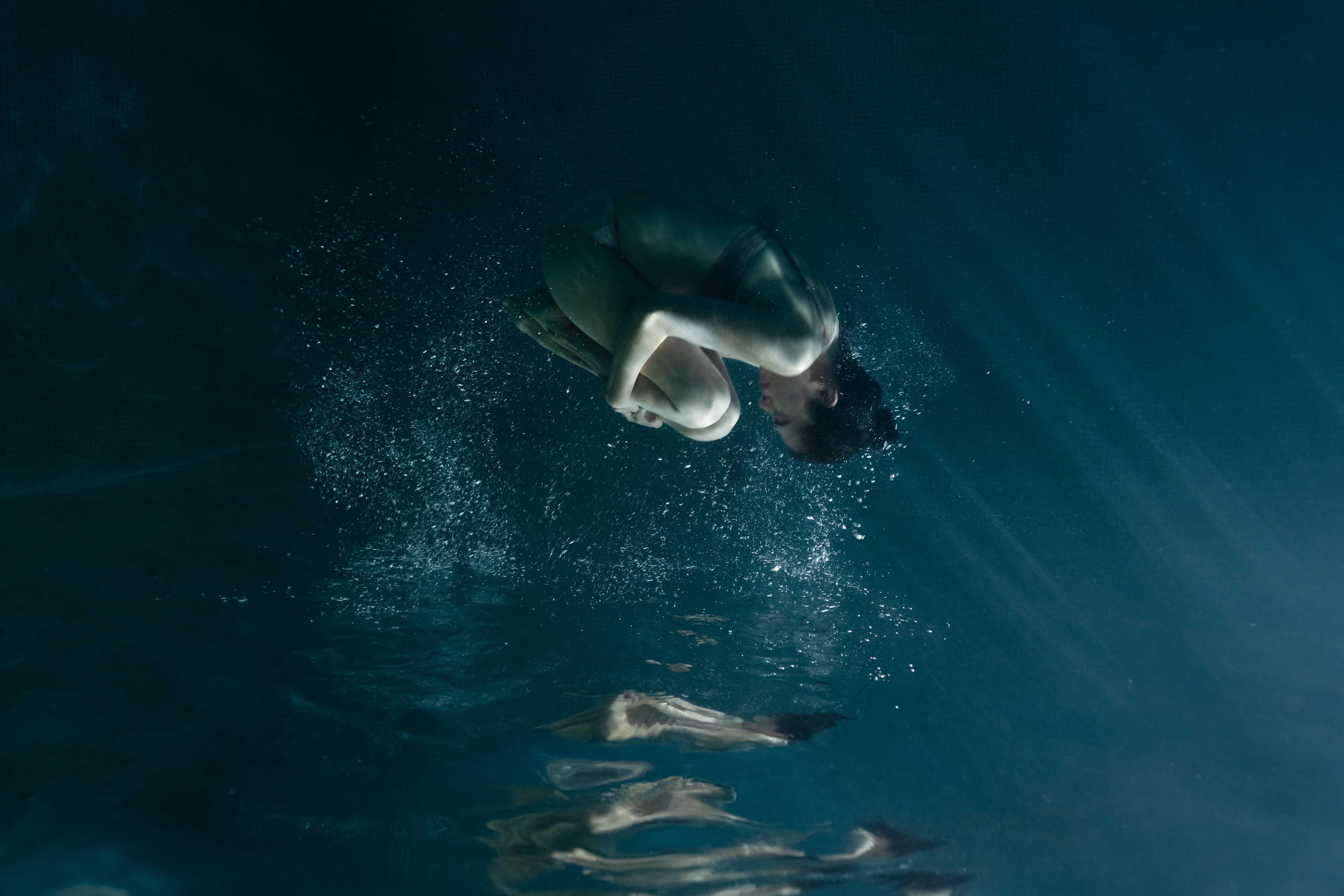
THE WOMB / MATRIZ

BIRTH / NACIMIENTO

Orestes Pursued by the Furies / ORESTES PERSEGUIDO POR ERINIAS
Then comes childhood, when the first gestures of identity begin to take shape. The rituals of “being a girl” are learned through observation, imitation, and repetition, often long before we become conscious of them. What we imitate gradually becomes part of who we believe we are.
As the body changes, the relationship with it can become more complicated. It no longer feels entirely our own. It is observed, commented on, desired, judged, and claimed. Shame and fear can enter the body, inherited through generations of silence, conditioning, and expectations.
In adolescence, rebellion can become a way of separating from what has been imposed. The feminine may be rejected, along with the mother figure and the qualities traditionally associated with her: nurturing, intuition, softness, and receptivity.
The movement begins to turn inward from there, questioning what has been inherited, what has been performed, and what might be reclaimed

DENIAL OF THE FEMININE / NEGACIÓN DE LO FEMENINO

QUEST FOR SOVEREIGNTY / BÚSQUEDA DE LA SOBERANÍA

THIS BODY STILL DOESN'T FEEL LIKE MINE / ÉSTE CUERPO SIGUE SIN SENTIRSE MÍO

UNTITLED

UNBALANCED/ DESEQUILIBRIO

SOVEREIGNITY / SOBERANÍA
Eventually, something begins to shift. A sense of power starts to rise, along with the need to take ownership of one’s voice, one’s image, and one’s path.
It is not a linear awakening. Growth can be messy, disorienting, and full of contradictions. Stepping into one’s own power can bring as much uncertainty as clarity, as old identities begin to loosen and a new sense of self takes shape.
The final part of this story is about balance, about finding peace between seemingly opposing forces. It is inspired by Ardhanarishvara, the Indian deity that embodies the union of masculine and feminine energies. Fluid, whole, and in motion, this figure became a symbol of what harmony can look and feel like when these forces are no longer in opposition, but integrated.
memoria / matriz is a return to intuition, to the body and the voice, a process of reinvention and an honoring of the balance that has been sought all along.
memoria / matriz is a return to intuition, to the body and the voice, a process of reinvention and an honoring of the balance that has been sought all along.

ARDANARISHVARA : THE BALANCE OF OPPOSING FORCES / ARDANARISHVARA : EL BALANCE DE LAS FUERZAS OPUESTAS